
Disclaimer: I am a GIA employee. This and all other written work reflects my sole opinion and is not representative of or related to my employer or employment status in any way.
I’m not what you call an optimistic person, by nature. Sure, I can hope and cross my fingers and make a wish on the birthday candles like anyone else, but in most things I am mostly full of a dubious sense of… doom. Dramatic, no?
So it should come as no surprise that when I shipped myself off to NYC just days before my time ran out to complete the final step of my GIA coursework, I wasn’t feeling anything but dread.
After more than 11 years, countless trips to NY (and later, Carlsbad), hours of study, multiple interrupted attempts, and a significant financial investment, could I really sit for the infamous 20-stone exam and expect to succeed?
As it turns out, I could. And I did!
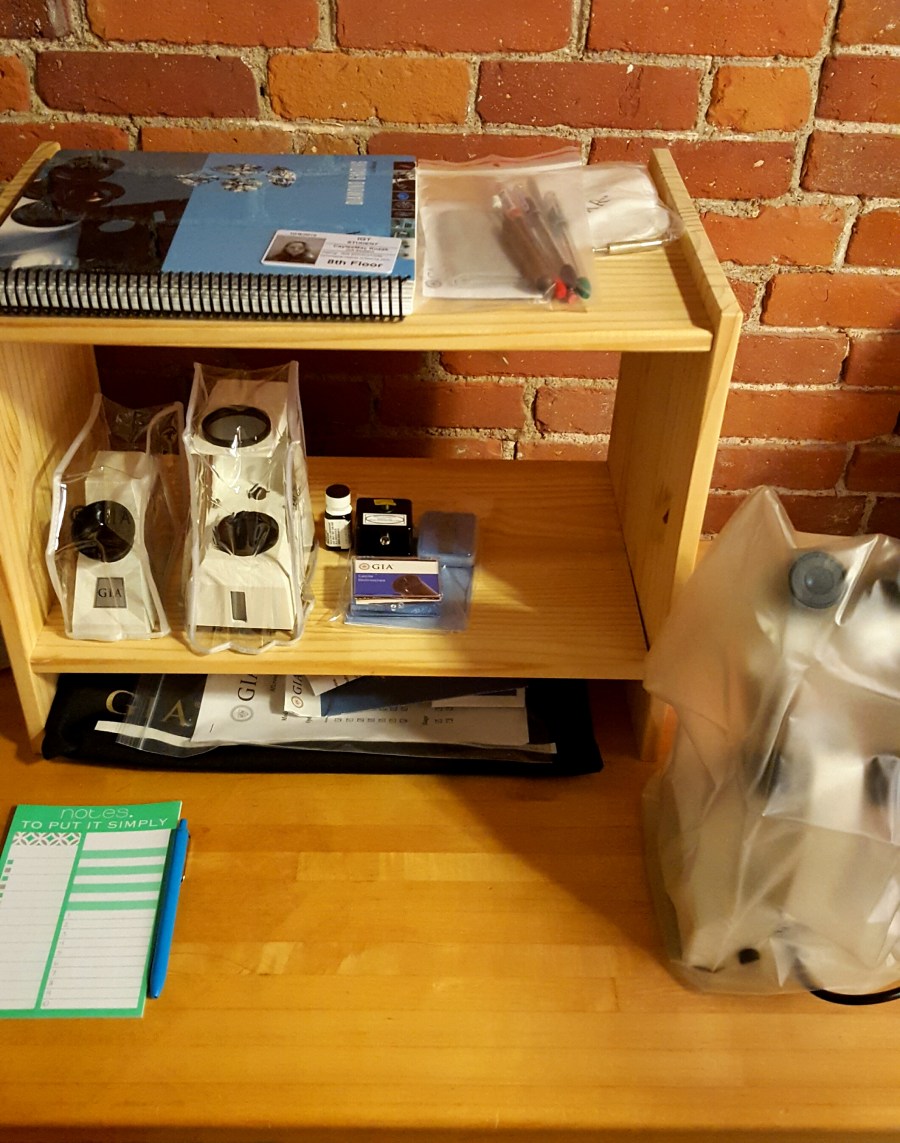
At about 2:30pm on a beautiful early fall day, I passed the test on my first attempt, finally earning those two little letters and a recognized credential that I have coveted for more than a decade.
There are plenty of people who scoff at the idea that academic or even trade credentials carry much weight, and certainly they aren’t required to be successful in most aspects of this industry. And we all probably know some incredibly experienced people with zero formal education, just as we know plenty of deeply unserious folks with a wall covered in diplomas and accolades. That’s always how it is — you can’t measure your worth against someone else’s by the number of pages in your CV.
At the same time, accomplishing a pursuit for knowledge and skill through accredited, standardized institutions indicates a certain pain threshold: perseverance, tolerance for stress, an ability to focus on objectively difficult tasks with technical precision, and a commitment to a set of standards laid out by a governing body. It’s hard work.
I’m proud of myself for finally, finally completing this long-desired goal. It’s an accomplishment I held in reverence for a long time, wondering if someday I’d join the ranks of others I know and respect. It’s proof that I can execute a set of scientific measurements accurately and reliably perform well within a set of standards to produce tangible results (something I find very satisfying as a mostly cerebral “thinker” and academic). And in a very real way, becoming a Graduate Gemologist fulfills my curiosity-driven soul, because it teaches a method for solving a problem and answering a question (as all good science should).
I don’t know what I’ll turn to next, but for the moment I’ll bask in the warm glow of completion and give my tired brain a little rest. The doom clouds can haunt somewhere else for awhile.





 Piece of {Karat} Cake