Travel the World, Pantone Style

Remember when I wouldn’t stop talking about color, and you thought my posts would never end? Well, you were right. But with the latest announcement of 210 new colors from Pantone, the Be-All-End-All Final Word on All Things Color (or so they seem to claim), can you blame me?

Of the approximately 10 million colors the human eye can see, the 52-year-old company has named, numbered, printed, collated, and collected a total of 2,310 colors including the newest additions. A drop in the proverbial bucket to be sure, but impressive when you consider the level of standardization they must achieve in order to standardize these colors. The highly consumable formats — cards, swatches, folders, books, etc. — are used by fashion and interior designers (and many others) to quickly and accurately describe colors.

Many of the new shades are intensified versions of familiar faces, with major expansion in the pink and orange categories. I sense a lean toward the exotic, with lots of richness and food-relevant hues that play well both with each other and as standouts with a neutral. Credit is given to the worldly and well-traveled Pantone creative team — and they do indeed spend time in countries around the globe, noting the color trends in food, fashion, and even technology. However, I’d like to think that a more globalized palette is simply long overdue in such a connected and visually-focused age. These beautiful new additions simply reflect a more complete view of the world as we see it.

As a kid who came of age in what I call the Crayola era, I grew up surrounded by such delicious-sounding color names as “macaroni and cheese”, “wild blue yonder”, and “razzmatazz”. Anything called “pink flamingo” or “fuzzy wuzzy” was just irresistible to me, and I pleaded for box after specialty box as much for the creative names as the vivid colors and gently pointed tips each new set would bring. The colors could transport me to favorite book settings and faraway places long before I later traveled there myself.

These days, the Pantone colors will set you back a bit more than your average ten-year-old’s allowance. It’s worth noting that these two prismatic powerhouses have never officially collaborated, though many color-savvy stylists will often reference both names of a similar color in order to evoke just the right shade. But perhaps, like a page from a coloring book, this newly-expanded array of colors will carry you away to a favorite childhood memory… or even a whole new destination, right from the comfort of your living room.
Show Me Your Creds

Credentials.

Did you cringe when you read that word? If not, yours are probably more than sufficient to command respect in your field (or you simply don’t have any need for them). If you did, then welcome to the club.

We all know that in most businesses, it’s not just who you know and what you’ve done that matters. From your hiring manager and CEO to your own client base, people will grant you an automatic jump in trust and confidence if they see some form of alphabet soup on your business card. Often these suffixes designate levels of education completed or certifications received, which do have a certain amount of credibility attached — a doctor without the MD just isn’t a doctor — but they are rarely proof of talent or ability.

Growing up in a heavily academic-oriented household, I have always been aware of a singular fact: your credentials may get you a seat at the table, but they won’t help you keep it warm. Everyone has a story about Dr. So-and-so’s total inability to fill out an intake form and write the proper dosage of a prescription despite thirty years’ experience, two doctorate degrees, and a wing in the new hospital named after him. Yes, we nod sagely, he obviously looks great on paper, but he doesn’t really have what it takes.

In contrast, I feel that the Dr. So-and-sos of the world are the exception that proves the rule. Going through the standard educational pathways shouldn’t be considered merely as minimum qualifications, but as a starting point to a greater discussion about knowledge, practical application, and person’s developing interest in a field or fields.

Obviously this topic is on my mind as I work to pursue my own degree pathway, but it also factors into my current position as gemologist-in-training. Customers will occasionally ask what the “AJP” after my name means, usually followed immediately with “oh, does that mean you’re a gemologist?” Alas, I tell them, I’m in the midst of my studies and training, but haven’t yet achieved the coveted Double-Gs. When friends or family are doing the asking, I go into greater detail about my passion for evolving an industry that is at times stuck in its own past, my interest in learning alongside the great tastemakers of the current age, and my desire to make positive contributions to the industry as a whole.

Phew. That’s a whole lot of lofty goal-setting to combine with a GG and a current full-time job. But as I inch my way there, I keep the thought of earning my chair — and keeping it warm! — forefront in my mind.

A Little Reminder

One of my primary roles here at work is to manage the inventory: accurate entry, tags, pricing, photographs, re-orders, show orders, invoice processing, etc. It’s a job that can be tedious from time to time (ahem, the Popular Bead Bracelet Brand era) but is usually rather interesting because it appeals to my inquisitive, detail-oriented brain and allows me to get my hands on every single piece of merchandise in the store as it arrives.

I also attempt what I call a self-inventory every so often, taking stock of my life and its various components and running down a list of places to improve, discard, or enhance. Recently my mind has been occupied with family, health, summer plans (golf lessons, new hiking boots), and of course my gemological studies. I tend to continue mulling over my educational material long after I’ve put it away for the day, which causes a disproportionate mental emphasis on the very technical details I’m currently learning. I end up totally engulfed in the bloodless and unromantic side of this industry, focusing all of my energy on numbers and figures and diagrams.

That’s great for test-taking and fundamental progress, but is ultimately useless in my day-to-day job until I work to distill it down into something I can use on the sales floor. I’ve been feeling waterlogged with minutiae, unable to climb onto solid ground from the watery bog of information overload.

So it was with genuine pleasure that I found myself on the business end of a diamond engagement ring sale just this week — and not a moment too soon.

The gentleman was polite and earnest; his female “helper” lived up to her job and was supportive but not pushy. We discussed settings & styles, diamond sizes & qualities, and priced out a few options. A brief lunch break on the sunny restaurant decks (them, not me) later, and a ring was born. Hooray!

This was not a “big” sale, or a tough one, or a thank-goodness-that’s-over interaction. The clean simplicity of selling a meaningful object to a happy and eager buyer was exactly the refreshing reminder I needed when terra firma seemed very far away. Clearly I required this experience in order to remember what we really do, what the purpose is behind all the numbers and calculations:

Joy. Happiness. Excitement. Love. Hope.

That’s our real business, our own small contribution to the betterment of the world. I am a facilitator, nothing more, as I gently nudge people toward an object that stands to represent all the best emotions we could ever want. And amidst the structure of carbon atoms and lengthy history of mining, I needed a little reminder about why I do it at all.

Wearable Tech Turns Back the Clock

I can see it now: twelve people, ranging in age and gender from the young male post-grad recently promoted to the 30-year female VP, sit around a long, sleek conference table in a downtown highrise. They sip seltzer waters — Pelligrino, natch — and whip out shiny Cross pens to take shorthand notes on legal pads bound in Italian leather. They are the Decision Makers, the Callers of the Shots, the Mucky-Mucks who run the biz.

Halfway through the meeting, it begins.

Bzzzzz. Bzzzzz. Bzzzzz.

A collective pause.

Bzzzz. Bzzzz. Bzzzz.

Nobody moves, or takes their eyes off the VP presently holding forth on shareholder terms. Nobody wants to be accused of having a cell phone (because it must be a cell phone, right?) ringing or alerting or notifying during such an important meeting.

Glancing around the table, aware of the distraction everyone is refusing to acknowledge, that VP spots a plain plastic band poking out from underneath a starched white shirt with mother-of-pearl cufflinks. It’s wrapped around the wrist of a forty-something partner, and Ms. Veep recognizes it as one of the ubiquitous health-freak-fitness-tracker-band-thingies. Aha! The culprit must be that sad object alerting the man he’s been seated for longer than the recommended 25 minutes or something.

The VP stares at the offending partner. The whole table stares at him. He looks around, wondering what on earth everyone’s looking at, because his device’s battery is long dead from lack of use, and can’t everyone tell it’s coming from the kid behind him?

Indeed, seated just a chair away, that newly-promoted young gentleman is still feigning total engagement in the older, platinum-haired lady’s speech about people he doesn’t know. It’s his wrist that is vibrating, the pattern alerting him to yet another pre-noon wedding e-mail from his fiance. He knows it’s before 12 o’clock because he glanced at that wrist — and all it told him was the time.

How can this be?

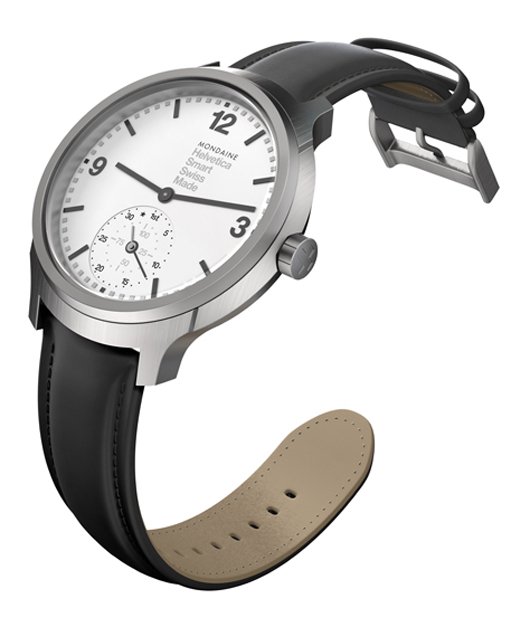
In her recent article for JCK Online, Senior Editor Jennifer Heebner (one of my personal idols) gives a report on a budding partnership between the established Swiss watch industry — long reputed to set the highest standard in timekeeping and timepiece manufacturing — and the infant wearable technology moguls of Silicon Valley. Their new partnership appears to focus on bringing the new high-tech software of life trackers into the old-world wristwatch, giving consumers the option to connect their cellphones to their wrists while not appearing to do so. Or, put another way, you can have your classic analog watch and sleep tracker, too.

I have been keeping an eye on the development of wearable tech for some time, mainly for professional interest. I will say, however, that as a woman who treats her watch like another piece of jewelry, I have been uniformly disappointed in the styles offered by most companies — up through, and in particular, the new Apple Watch.

So this development speaks to my personal issue with the tech (namely, it’s just plain ugly) on top of addressing the broader industry complaints about a lack of cache and quality in the overall build. It appears as though form and function might make a better couple than previously thought, if the broader and perhaps older market can be tapped via their interest in upholding the quality wristwatch tradition.

Would you wear an analog-and-tech watch? Do you use a life tracker of any kind right now? Did you pull out your phone to make sure it’s silenced while you read this? Tell me more!

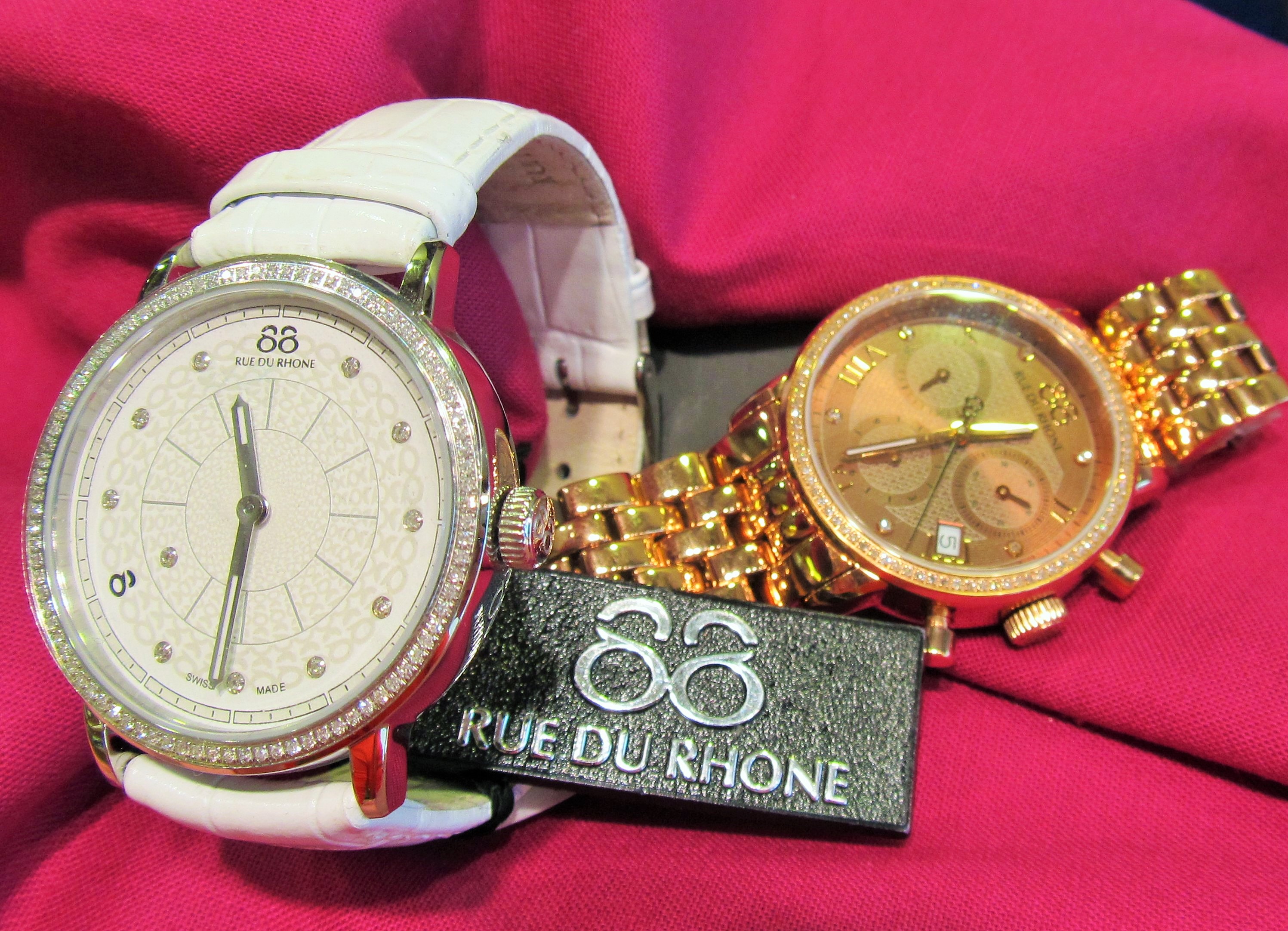
Swiss timepieces by 88 Rue du Rhone, a Raymond Weil affiliate

Featured Image from JCK Online: Helevetica No. 1 Smartwatch from Mondaine