The Tradeshow in My Dreams

It’s June, and my feet don’t hurt.

I’m not jetlagged or dehydrated, and I don’t have a lingering headache (or hangover).

There are no business cards to stack and sort and file, no follow-up emails to send, no orders to record.

My voice isn’t hoarse, my wallet isn’t empty (well, no emptier than usual), and I don’t even have any laundry to do.

For many years — almost my whole career — I considered tradeshows in general and Vegas in particular to be, in a word, unmissable. I have made some of the most valuable connections both personally and professionally at shows, and the idea of not getting that face time was nearly unthinkable. And of course, the finger-on-the-pulse information gathering I pursued added another critical factor.

And then, like so many things, 2020 happened and changed it up.

There was no Vegas show that year, and I did not attend in 2021.

2022 was a weird one, where I did go but had to squeeze Luxury, JCK, and Couture in half my usual time. It came at a professional crossroads for me as well, which added some extra spice. Industry sentiment was mixed at best, and there was an air of frenetic uncertainty that reminded me of shows from 2016.

This year… well, here I found myself fielding messages from friends and colleagues about dinners I won’t attend, charity miles I won’t run, and coincidental meetups that won’t happen. I admit it: FOMO was alive and well as I scrolled social media. I sincerely missed my people (friends old and new), the buzz, the energy. It felt pretty strange to simply not be there.

Instead, I’ve been reading every word both official and otherwise, listening to and observing not only the facts and figures but the tone, the sentiment, the things more felt than heard. I have the leisure to do that this year, from a vantage point I don’t often experience: an insider perched on the outside.

What’s the word? For one, optimism — cautious, in some sectors, but present nonetheless — is clearly present. The natural vs. synthetic diamond feud raged but took a back seat to discussions on sustainability, traceability, artisanal mining, the independent jeweler, and the up-and-coming designer. Diversity, inclusivity, global connections, strength in unified messaging, clarity for consumers… it seems these were all subjects given at least some attention. Hallelujah.

It’s possible I’m just hearing what I want to hear, and that the spin from the press is intentional rather than accurate. But sentiment from most sectors seems to genuinely reflect the core of what been reported, and that’s a refreshing take on what is often a more negative outlook.

So despite this year’s circumstances, I have once again elected to focus on what I can learn from tradeshows — even when I’m not there.
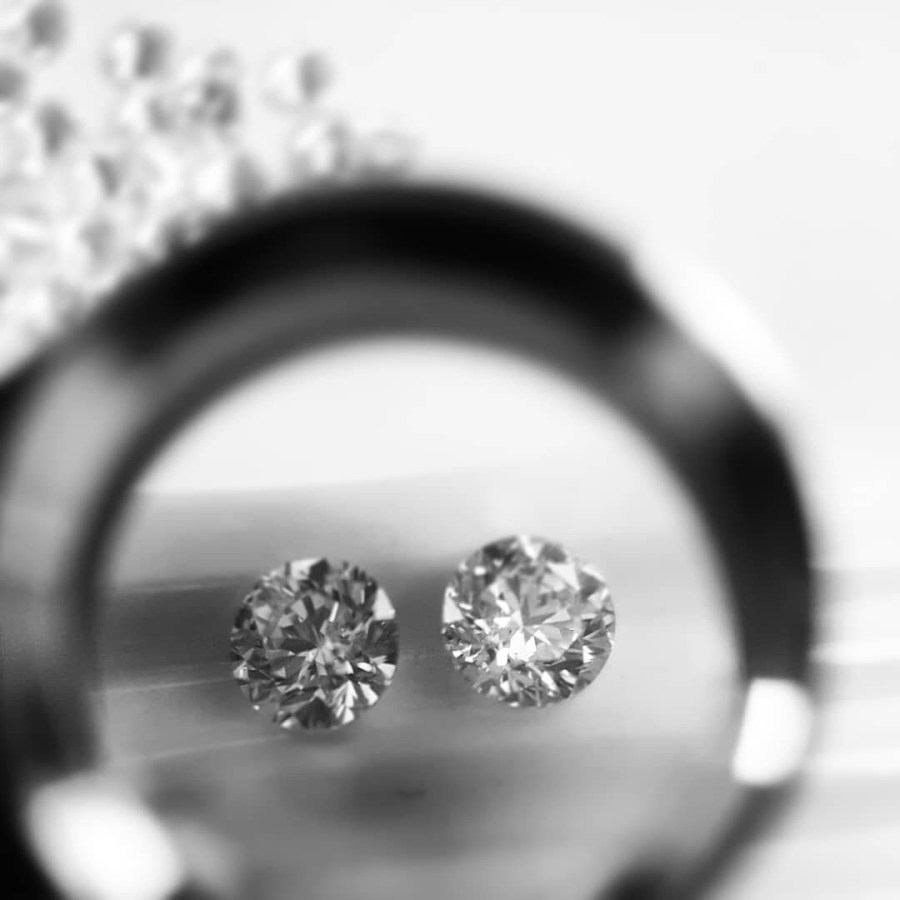
Dancing with Diamonds: a Decade in Review

I don’t remember my first day. Not clearly, anyway. Some time in late winter or early spring of 2013 I walked in the door to day one of my future — not that I had any idea at the time. I was in a period of transition: living in a new town and state, a newlywed, my previous career plans blown to pieces by the change in location, adrift and in need of some terra firma.

It didn’t take me very long to realize I had metaphorically tripped and fallen over ass-backwards into an industry and career that would evolve into a passion, maybe even a true calling. The women around me in those early days — a career salesperson, a master bench goldsmith, a gemologist, and others — collectively formed a foundation so solid it’s carried me to the present, ten years hence.

From retail I sailed onward to technology and manufacturing, design, buying, analytics, planning, merchandising, and of course writing, writing, writing. I met more influential people along the way, building myself a set of ironclad moral standards, work ethic, and a broadened sense of purpose within an industry that so easily distracts from the lurking troubles and ugly truths with shining baubles and a frothy, PR-enhanced exterior.

It’s easy enough to fall in love with jewelry, but staying in love when the blinders are ripped off and you’re forced to confront the people and ideologies with whom you inherently disagree… that takes something deeper, more significant. I’ve had to dig deep within myself on more than one occasion, asking if I had the temerity to withstand the pressures and uncertainty a field like this can bring to bear.

Ultimately, it was once again the people who managed to bring my head around and keep me here. It is impossible to acknowledge and thank every mentor, executive, blogger, instructor, sales rep, designer, analyst, CEO, secretary, lapidary, benchie, and colleague (maybe in my memoirs someday, huh?) who has extended their influence and helped to shape my path. There are incredible people running outstanding organizations here, and their clear-sighted dedication never ceases to impress me as I work to follow their examples as best I can.

And don’t think for a moment there hasn’t been any fun — these folks know how to party. Year after year, the good times roll in Vegas or Tucson or Madrid or wherever else we gather for wining and dining (sometimes dancing, sometimes wandering the Strip at 2am only to run a 5K on it three hours later). We even manage to sneak in a few lengthy conversations about the state of the world, the weather, our homes and families, and whether or not the Red Sox will ever win another championship (obviously yes).

There’s plenty of virtual ink to spend on the tough times too, both as an industry and in our own lives. The cycle of good years, mediocre years, and oh-shit years is exhausting and occasionally baffling, but it’s our collective ability to pivot and roll with the punches that keeps the boats mostly afloat. I’ve learned to take the lessons from downturns and apply them when the sun shines again, which has proved to be a valuable skill in just about every job I’ve held. And I’m certainly glad I was able to lean on friends and coworkers during a personal rough 18-month patch (mom’s cancer, job loss, divorce), complete with commemorative jewelry and a not insignificant amount of bubbles (“in victory, you deserve Champagne; in defeat, you need it” commonly misattributed to Napoleon).

Ten years in, and there’s still so much to do. My ambitions and goals have shifted over the years, but as I’ve been told countless times, a decade in this business is considered a young upstart at best. I’m here because of the potential: for women, for innovation, and for just me as a gem nerd who is constantly fascinated by the science, business, and beauty of this world. This stuff is a joy to write about, and at the moment, I’m very lucky to do that every single day.

And I’m here for the people, the countless opportunities to expand my education, the vast tangle of globally-interwoven entities, and yes, the beauty and wonder of taking a raw natural resource and following its complex journey to personal treasured memento. To all of the people I’ve encountered along the way thus far, I thank you and thank whatever fortune that crossed our paths.

Jewelry has a place in the human experience, and because of that, our humanity is our strength. Whether we’re celebrating a new love or an old one, perhaps a love that’s lost or love that’s ended, a love of a person, a place, a thing, maybe even a love of love (too much?), we’re eyeballs-deep in the emotional interplay of everyone who has ever reached for a sparkly thing and it made them feel something. Perhaps in the end, that’s really why I’m here.


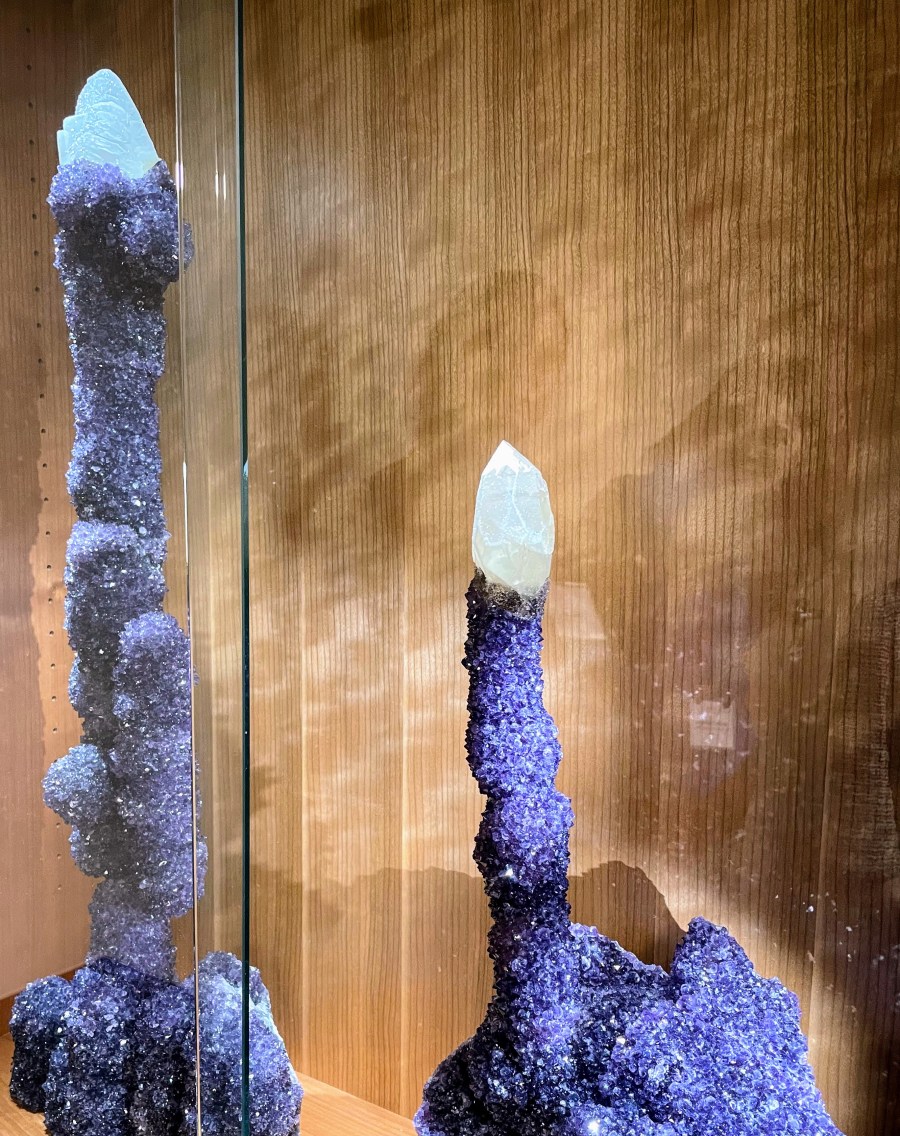
Featured image: taken by me at the The University of Arizona Alfie Norville Gem & Mineral Museum. It just seemed appropriate.

Missing Pieces

A colleague of mine recently posed this question to a large and varied industry group: what’s missing from today’s jewelry market?

Deceptively simple, his query struck me rather forcibly because I had just begun to write a blog post (the one you’re reading now) as a brief study in what I felt has been underrepresented or even entirely absent from mainstream jewelry.

My response was internet-appropriately brief, but in this space I thought a little more elaboration was due. We tend to think of jewelry in terms of categories, so what follows is a sort of commentary breakdown, combining some unofficial bird’s-eye-view concepts that borrow heavily from my daily work with a dash or three of personal, yes-I’m-a-Millennial-get-over-it opinions. Ahem.

Engagement/wedding: I know you love it, but the halo in all its possible iterations has been done — and done very well — to death. The style I never see is a band, thin or wide, with beautiful engraving that goes far, far beyond the vintage flowers-ropes-vines trifecta. Little or no gemstones are needed, but instead, well-executed metalwork with designs that speak to clean, bold, or even whimsical patterns are nowhere to be found.

Fashion: give me sleek, modern designs that emphasize amazing color and perhaps clean geometric patterns. Give me dark and light, negative space, comfortable, and hefty. Show off the amazingly diverse rainbow of colored gems we have available, with non-standard cuts set deep into pieces that highlight texture and celebrate something, anything, that reflects personality.

Symbolic: more like a subcategory, but the idea of talismanic jewelry has always been both appealing and relatively scarce. Sure, the average consumer often takes any special gift and turns it into a symbol (that being the point, more often than not, of giving jewelry in the first place), but I don’t often see designers inventing completely new symbols for people to use in honor or celebration of something specific. And so help me if I see one more poorly-rendered Ribbon of Whatever dangling off a charm bracelet…

Looks Custom But Isn’t: okay, I made up this category, but go with it. If more designers did what only a select few have ever done — which is to say, blasted into the stratosphere high above the comfort zone — we’d have so much more clever things to wear. You all know I’m the biggest advocate for full custom jewelry, but often it’s best to let the creative geniuses around us take the lead and make a concept come to life. Sometimes a designer has created something that is so utterly perfect, so fitting for a person, that it looks and feels like it was custom made even when it wasn’t. That’s quite an achievement.

Now, naming names isn’t normally my thing, as I don’t accept payment in any form for this blog and I strongly prefer to stay as neutral as possible. But I’ll make an exception here by listing a few designers whose work I truly admire as being some combination of unique, progressive, and striving to rise above the commonplace. In no particular order, I’ve been very interested in the following**:

— Collette, for beautiful and edgy
— Retrouvai, for bold and graphic
— Temple St. Clair, for whimsical and extravagant
— Marla Aaron, for cool and inventive
— Wendy Brandes, for modern and irreverent

These folks are doing things outside the proverbial box more often than not, and you don’t have to fall in love with every single piece to appreciate the brilliance behind much of their respective works. These designers also have individual pieces or entire lines that are wholly, uniquely their own, which means a knock-off is very easy to spot. Imitation may be a form of flattery, but it’s also horrible and illegal and I’m really sick of the design theft that often occurs when big box stores want a designer’s look without actually paying them for it. (End rant).

For the record, that’s an incredibly incomplete list. Don’t message me with any form of “but HOW could you not mention my favorite designer, XYZ?!” or even “ABC doesn’t deserve to be named!!” All designers are striving and struggling and working and shedding blood/sweat/tears/diamonds in what they do. I have many, many designer friends whose work I find incredibly appealing, but I’m not in this game for the promotional benefits. This is just an informed opinion, folks.

For consumers and industry vets alike, I would really love to know: what do you think is missing from the market? What do you want to see, or wear, or buy, or design? Please chime in here, in this openly democratic forum.

**I won’t even put a link. Check them out, or don’t.

Back in Time: An Evening with Vortic Watch Co.

When I first announced my transition from fine jewelry retail to 3D printing tech, the responses varied from a tentatively supportive “sounds… interesting” to something like “tech? But what about jewelry?!” and even “does that mean you’ll wear jeans and t-shirts and use words like ‘bandwidth’?” (yes, no, and yes, for the record).

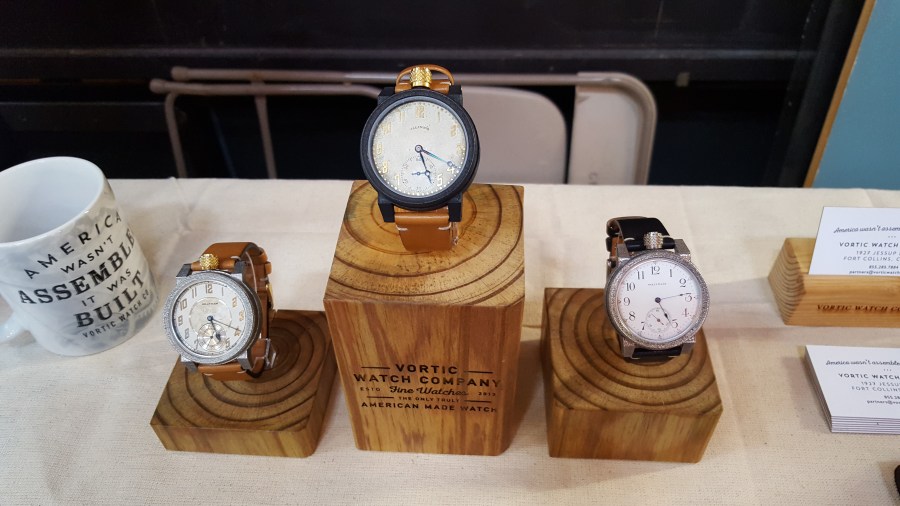
The truth is, I’ve been even more involved with the jewelry industry since I took on this role, and it’s been the most amazing experience to have the privilege of meeting people like R.T. Custer, co-founder and CEO of Vortic Watch. He had the brilliant notion to take US-made, early-20th-century pocket watches that were sitting around unused and unloved, and convert them into chic, industrial wristwatches.

What does this have to do with me? Well, the original pieces he produced involved serious Solidworks CAD skills and some impressive wrangling of a little old 3D printer. R.T. and his business partner Tyler Wolfe (Vortic COO) have grown this original Kickstarter into a full-fledged business, producing custom casements and reviving an American watchmaking tradition many believed had died off in the post-industrial era.

Vortic Watch hosted a special event last weekend at the Charles River Museum of Industry and Innovation, which houses an incredible collection of historic pieces from the American Industrial Revolution. They were kind enough to invite me as both a representative of the technology used to bring these magical devices to life, and as a jewelry and watch nerd who seriously can’t stop using their design tool to play with the custom watch builder options.

There are few things that appeal to me more than a seamless integration of old-world style and modern techniques, so this company truly hits it out of the park. From their tough-but-elegant styling to the significant history behind the movements, these timepieces absolutely belong both on the wrist and in the enthusiast’s collection.

Take a look at a few highlights from the event in the slideshow below!

This slideshow requires JavaScript.

Who Broke the Crystal Ball?

There are a lot of things to like about my job: intelligent and talented colleagues, innovative and fast-moving core industry, free food and booze… y’know, the usual expected combination of perks at a tech start-up.

But the very best parts of my day revolve around the conversations I get to have with jewelry industry folks. They come from a huge range of specialties — retailers, designers, manufacturers, students, teachers, artists — and once we get to know each other a bit, many of them are willing to take a few moments to chat about the general state of the industry.

These conversations have given me both deep insight into the inner workings and relationships within the network itself, and a bird’s eye view of the US (and often global) jewelry industry as a whole. Useful and interesting stuff.

In a totally unscientific way, I’m been taking notes on these discussions and keeping track of what people seem to be saying. Here’s an overview of some of the most common topics and their subsequent commentary:

“The industry is changing.”
This is by far the most popular statement. It seems that nearly everyone is in agreement about the state of flux and evolution, keeping in mind that anyone talking to me right now is probably already embracing a certain amount of technology and the momentum to implement it.

But I perceive a certain level of apprehension mixed in there as well, particularly when some of the smaller shops are considering their long-term business plans. Comments such as “I’m buying this because my son/daughter thinks we need it” and “I hope you can teach an old dog new tricks” imply an understandable hesitation, but they also address the larger climate of uncertainty in the market.

“Nobody buys X anymore, they only want custom.”
If you’re handy with CAD or a designer-in-training, prepare yourself for desperate job offers and high expectations — but not necessarily an understanding employer. There is a definite skills and knowledge gap happening here, and it’s what I refer to as Magic Box Syndrome.

This tendency to demand good/fast/cheap/easy from technology is frustrating both for the people who don’t understand why it isn’t perfect, and for those of us trying to convince users that it’s still pretty darn good. That expensive computer program with beautiful renderings can’t make you a better designer if you don’t understand the fundamentals of jewelry construction (including CAM, casting, and at least some benchwork). Our little orange box can’t magically reproduce something your designer dreamed up if it’s unprintable, uncastable, and probably unwearable.

And what happens when, inevitably at this time of year, the conversation turns to the holiday season?

I’ve learned to brace myself.

While the majority of my clients are buying a 3D printer to expand or improve their businesses, I come across the occasional purchaser who is simply trying to save it. Three separate shops in the last week have lost their CAD people, and are trying to catch up on CAD/CAM themselves before the rush. Two other businesses I know are about to begin casting their own work, because outsourcing takes too much time (and therefore money). And of course, my manufacturing clients are facing increased labor and metal costs, high demand for fast turnover, on custom pieces and a huge uptick in small-batch multi-unit orders that will probably end up as quick mountings for engagement season.

“We’re in for a wild ride,” they say.

But the saner voices — less panicked, more curious and optimistic about the future — are predicting a time of general change toward custom or customized jewelry in a way that might just save the entire industry from itself. As I’ve mentioned once or twice, adapting our old business models to the new wave of consumers is the only realistic way to preserve the beauty of treasured jewelry pieces and still grow as an industry.

It is my good fortune to be in communication with such a wide variety of interesting people, and to hear firsthand how many of them are keeping their eyes on the prize and working to turn this big old ship around. I can guide and support them through at least a small part of that process, and hope that their eventual successes will pave the way for others.

Vegas: The Starting Gate

Rounding the final corner! Down the home stretch! Hitting his stride! Photo finish!

I blame it on my birthday** but I’ve always appreciated horse racing metaphors. There’s something so universally appealing about them, so evocative of a brief but heart-pounding excitement shared by a crowd that seems to hold its collective breath until the race is over.

That’s a bit like how I feel about Jewelry Week, hosted annually in Sin City and attended by thousands of industry professionals in a business and social whirlwind. It’s a fast-paced week, requiring immense amounts of energy and serious willpower to both get stuff done and have fun doing it.

For those of us on the non-retail side of the booth, the connections and sales generated at this show can make or break an entire year’s worth of business (but y’know, no pressure). It’s an opportunity to meet with clients in person, announce new and exciting things (!!), and yes, scope out the competition.

Buyers who attend are also on a mission: spend well, spend wisely. The glitter of the show is an easy distraction for the spendthrift store buyer, as it washes everything in an enticing aura of beauty and incites a covetous round of gotta-have-it fever.

This is, of course, the point. Any show is only as successful as its revenue generation — in this case, not for the show itself, but for the sellers who attend it — so a careful eye is kept on the general mood throughout the week. Trends are spotted, new and innovative offerings are critiqued, and dollars are measured.

We’ve been hearing a lot about the changes facing the industry right now, including questions about what retailers in particular should do to attract consumers of all ages and levels. It makes me wonder: what can both buyers and sellers learn from this show? What makes it so successful as an event, and how do we generate that kind of madhouse, leave-your-inhibitions-at-the-door vibe in our own businesses?

Something else to consider: the show has added a new area to the already-crowded floor, dedicating a space to what was once “crossover” and is now called simply “bridge” jewelry. This category consists of sterling-and-gold pieces with fashion and trendy appeal, at prices intended to be higher than basic fashion jewelry but lower or just approaching that of the fine category. It’s the stuff millennials buy for themselves (in theory), and it’s a popular but ever-moving target.

I’m interested to see the category perform in its own arena and not as second fiddle to its bookend price points. I will also be curious to learn if this one-size-fits-most approach feels like a fresh idea that just might save the middle of the market, or simply a rehash of the “entry level” model we see in the housing and auto markets. The former inspires repeat business, self purchasing, and aspirational purchases down the road. The latter sets buyers up for disappointment and frustration, stalling momentum and causing sales to drop. We’ll see which side wins this coin toss.

And as usual, there will be a significant amount of M-word (Millennial) dropping in the exhibit halls. This ties in directly with the two ideas I just mentioned, and the prevalence of a heavy generational focus has helped me formulate a kind of consumer theory I’ve been kicking around: shifting the focus too far onto the fashion/bridge category could hinder the long-term, aspirational level sales, preventing sellers from converting the $500 spenders into $5K+ consumers. I have found that when someone is sold on “good enough,” it can be all the more challenging to grow them into larger or more frequent purchasers.

So as the flag is raised on this year’s show, I’ll be keeping in mind these questions (and other thoughts) to revisit after the fact. Here’s hoping it won’t be heavy going for attendees, and that everyone will have free rein to buy and sell and enjoy themselves. I know I’m chomping at the bit to be on my way!


**Kentucky Derby Day. Every year without fail, my father-in-law (a horse racing fanatic) asks me to name the winning horse, who also happened to be one of only three fillies to ever win the Derby.

The Missing Mentor

Conventional wisdom states that in order to be successful in business, a person with little experience should seek out a person with lots of it, in order to obtain some sort of magical guidance/tutelage/oracle cocktail that will propel the budding young star into a galaxy far, far away.

Or something like that.

The truth is, long-term mentoring relationships are both rare and difficult to come by, particularly for anyone working as a minority of any kind in his or her field. Those partnerships take time, patience, and dedication to build and manage; the mentor and mentee need to feel equally invested in each other in order to sustain a mutual professional bond.

As a writer, I’m fortunate that many of my role models are relatively accessible people, at least in the sense that some of them are public figures and active industry leaders — I can always find their work, and with a bit of effort I can occasionally meet them in person at trade events. This doesn’t make them mentors in the traditional sense, but it provides some building blocks for my career direction that I wouldn’t otherwise have.

In addition, I find the good folks of the jewelry industry to be pretty forthcoming with advice, all things considered. There is the sense that a rising tide will lift all boats, and as I make forays into the realm of connection-building with an earnest desire to learn, I’ve received mostly warm welcomes from both men and women. (Mostly.)

Unfortunately, my immediate work sphere has no such people available. First of all, are exactly zero female “higher ups” at my current company of about 150. Nada. Goose egg. I work in an environment that is totally dominated by Category: Straight White Male, Subcategory: Privileged Millennial, and it shows.

You’d have to be fortunate enough to live off the grid in order to escape the genderized buzzwords of the modern tech world. I can #PowerPose, #LeanIn, #AskHerMore, and go #AllInForHer to my little heart’s content (I could even be married to a man who’s #HeforShe), but would Tweeting any of those get me closer to a tech exec? Unlikely.

In an odd twist, I’ve had about a half-dozen women at my own company go out of their ways to discuss this very issue with me. Keep in mind, I don’t work in HR or People Operations. Either those power poses are really working, or I’m simply much more outspoken against the downright absurd lack of women in general and in leadership in particular.

(True story: when I paraphrased The Notorious RBG’s famous quote about the number of women on the Supreme Court it will take to satisfy her — all of them — I got laughed at. Actually laughed at for daring to argue that all-female anything is not a crazy idea.)

So what’s the deal? There are many theories, but right now I’m eyeing the thoughts laid out in this post. Essentially, we might need to rethink our approach to the mentoring function entirely. While building a solid connection with a few select people should still be on the radar, it may be more beneficial to “create mentoring moments right around you.” This means paying attention to the people who are most easily accessible — yes, including your peers — and seeking out a more impromptu mentoring dynamic, easing some of the pressures that come with long-term relationships. This advice is founded in a pragmatic approach to the ways and means of business today.

My personal preference is still to pursue a more lasting bond, one that must be built on developing trust and a deeper understanding between the people involved. But perhaps it’s in my best interest (and the interests of women everywhere) to take the growth opportunities when we can get them.

P.S. The header photo is proof I’ve been Power Posin’ since 2008, folks.

MJSA Expo Recap: Spring Forward

Hello, NYC. We meet again! Your trains were under construction, your Ubers were late, and your weather threw a hissy fit… but your bagels are delicious, your architecture never fails to impress, and your impact on business was trending positive. So altogether, thanks again for confirming my love/hate affair.

This show was my second opportunity to stand on the other side of the counter, and I’m happy to report that it changes my love of trade shows not one bit. I managed to speak with some fascinating people, meet digital friends in real life, and even make progress in some personal goals — a successful outing by any standard.

One of my favorite things to do at shows is walk around a few times, sometimes stopping to say hello to old friends and make new ones, but often simply to observe how exhibitors and buyers are interacting. You catch some interesting things by casting a wide net, not seeking any particular insight.

For example, it seems that companies who make it their business to fully educate and build relationships (real ones) with their clients have a much more welcoming atmosphere at the booth, even when they’re swamped with people. When I watch a sales rep turn to a lurker and tell them, “I will be happy to explain this further, and you’re welcome to listen to what I’m saying to Ms. Smith here, just please give me a few more moments with her” I see an immediate change in that lurker’s body language. They adjust from a defensive, stop-ignoring-me-you-idiot posture into a polite and attentive listener, willing to wait because they’ve been prioritized.

On the other hand,  I myself stood at a booth full of reps for 4 minutes (yep, I counted) before my presence was even acknowledged. My badge was not immediately visible, so they had no way of knowing if I was a buyer, a competitor, or someone lost on her way to the food court. When someone finally came over, I was reading a piece of literature and he planted himself directly in front of me, crossed his arms, and said (I kid you not), “is there something you want?”

I’m not sure how successful that is as a sales tactic, but you can bet it didn’t go over well with me.

Like I said, you learn a lot walking the show and observing. I felt the overall pace was upbeat and sustained, despite some sleepy eyes on Day 1 due to the nation-wide inexplicable loss of an hour’s sleep. In speaking with a few well-respected and longtime industry salespeople, I learned that interest in a new and improved approach to doing business continues to grow.

It’s always nice to see nodding heads when I talk about integrating updated technologies with time-tested techniques, but I’m starting to see designers and retailers walk the walk. Many visitors to our booth had at least two generations in attendance, and more than one “Jr.” could be heard emphatically arguing in favor of the latest CADsoftware and CAM instrument while “Sr.” looked a little worried, a little confused, and not a little proud.

Spring forward: yes, it was a good trip after all.


Happy Trails

Everyone is familiar with the old chestnut, “you don’t know what you have until it’s gone.” Usually it’s used in the context of loss — a person, a thing, a relationship — but I’d like to turn that around and apply it to losing a feeling.

Stress.

Of course, I knew I was stressed. I talked about being stressed, feeling stressed, and Oh, the ache in my shoulders! Everyone around me expressed concern, sometimes with sympathy but often with increasing frustration at my inability to truly grasp how unhealthy my life had become.

I was allowing the things in my life I hated most to completely control me, and I let it happen for far too long. I got so accustomed to the weight of the world on my shoulders that I couldn’t imagine daily life without it, so I stopped trying.

But no more! To paraphrase a truly terrible pop hit, I can breathe for the first time (yeah, yeah). Now that I’m moving past the horrors of leaving a job, moving, and starting a new job in the space of two weeks (not a path I recommend, by the way), the realization that I am in control of my life again is dawning. That weight has been lifted and it feels damn good.

In related news, prepare for a focus shift on this here blog. I still consider myself a member of the jewelry industry, but my attention will be directed toward the advancement and adoption of new technologies and how we as a group can move forward into a new era of creating, buying, and selling.

You’ll see the hashtag #womenintech popping up, alongside #jewelrypeople and of course #3dprinting. I’m still working on some sort of jewelry-tech hybrid hashtag (#3Diamonds?), and genius suggestions are welcome. Find me on other social channels and please do say hello! I’m busting out of the retail box and I’m ready to forge ahead, blazing new trails.

There’s a lot of hard work and excitement headed my way. Carpe opportunitatem!


True (Blue) Tech

Now that I’ve covered the philosophical angle of my recent life changes, it’s time to begin introductions for my exciting new focus: technology & jewelry.

If you’ve asked me about my industry at any point in the last few years, you probably got an earful about my frustrations with jewelry people’s tendency to ignore, withhold, refute, squelch, circumvent, or otherwise deny the demand for the adoption of new technologies. Everything from mining and manufacturing to sales and advertising is in desperate need of an update, of the kind that will integrate all the good stuff of the “old” ways — personal service, strong relationships, gemological & bench expertise — with the many benefits of the new and forward-thinking.

This is not to say that the industry doesn’t already utilize some of the wonders of today. Advances in laser welding, gemstone treatment, pearl farming, metallurgy, CAD/CAM, and e-commerce have been adopted to great effect, though not as universally as I would like. We’ve come a long way, but there is far to go.

Today’s customers are rapidly losing interest in a world they see as a paragon of by-gone ideals, and nostalgia only opens the wallet to far. I want to see an engaged clientele who demand excellence in service, quality, source transparency, and storytelling… you know, all the things we do best.

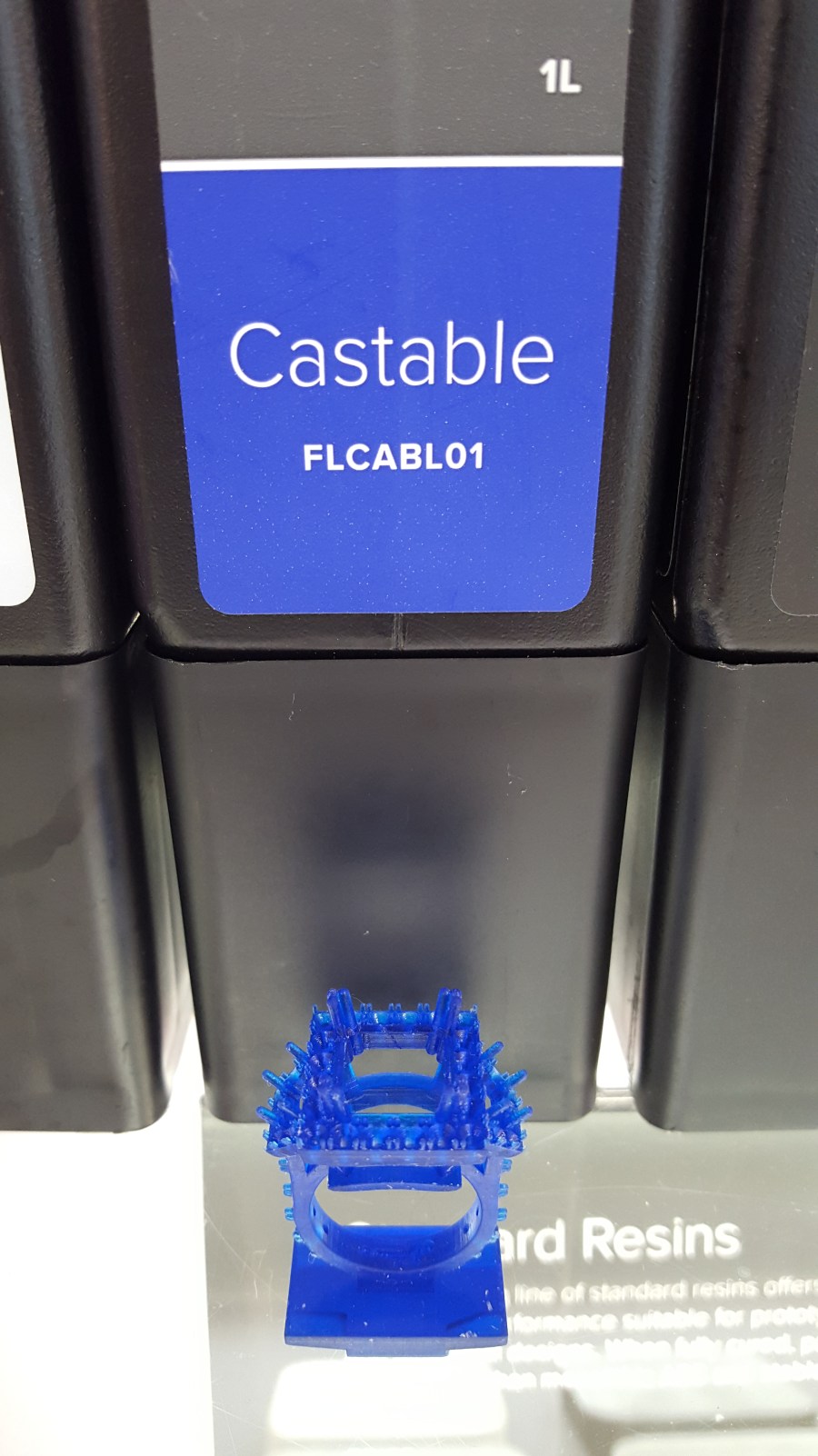
wp-1453380921150.jpg
Top to bottom: castable resin, rough casting, polished ring

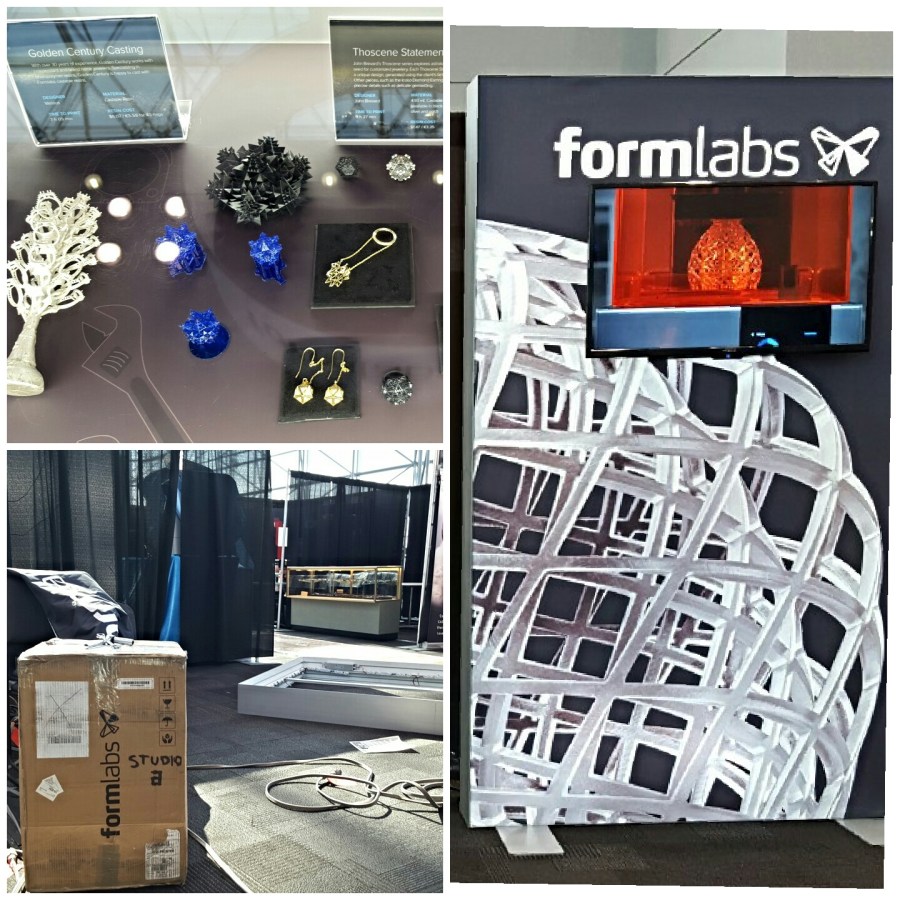
So I have joined a company that is “new tech” to the core, with the goal of bringing their fresh-eyed approach to the world of jewelry. These people are smart, savvy, and looking to make an impact on how we make stuff (all kinds of stuff), which will have a massive impact on how we design, create, advertise, and sell stuff. Replace “stuff” with “jewelry” and you have my full attention and dedication.

What does this mean for my daily life? Well, more denim and flats (and fewer diamonds), for one thing! It means I can turn my focus to the building blocks of the industry, perhaps helping to affect change and influence the direction we take in the coming years. I want to see the jewelry industry emerge from years of tech denial and embrace the power of doing things in new ways in order to achieve long-term stability and growth. I want more people wearing beautiful things that are made well.

Buckle up, people. No more hiding behind half a century of how-it’s-always-been-done. Wake up and smell the lasers, folks — I’m coming for you.